Welcome to the desert of the real.
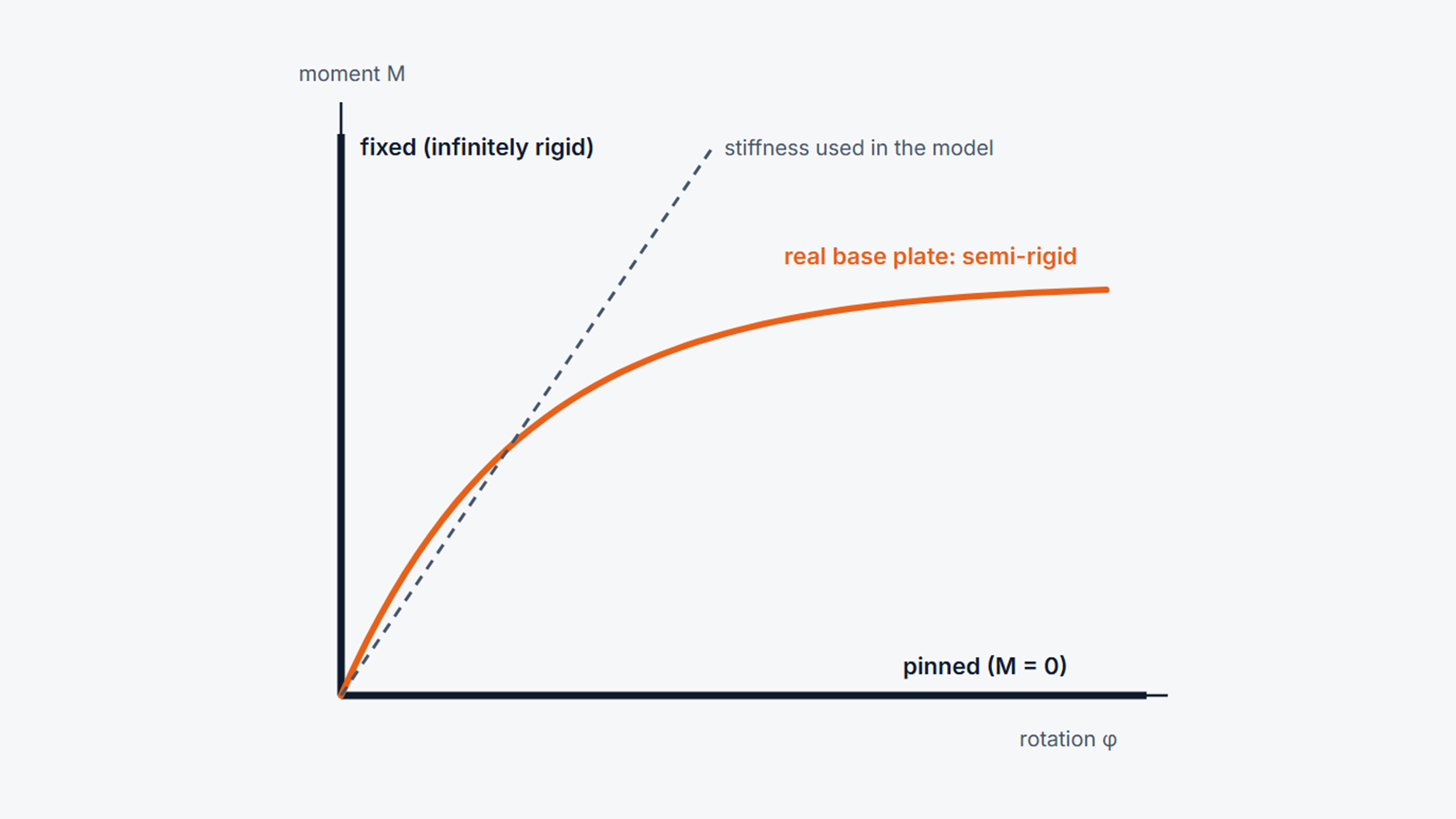
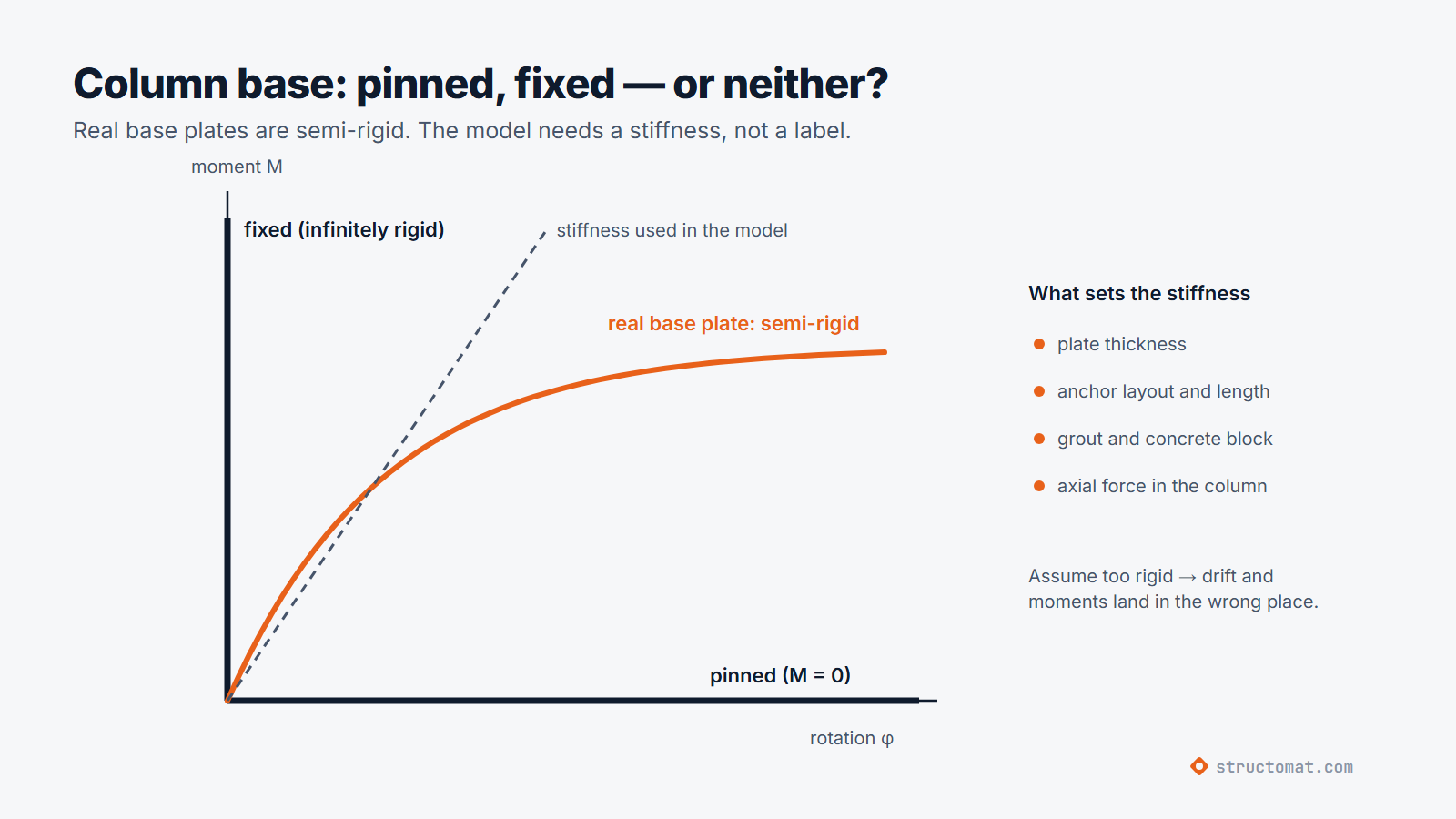
Pinned and fixed connections exist only in theory. Real connections sit somewhere between these two extremes. Today’s software can estimate the stiffness of a connection and use it directly in the model, but for everyday design there are also well-established shortcuts.
Practical stiffness assumptions for column bases
The rules below follow the NCCI guidance widely used with Eurocode 3, SN045 Column base stiffness for global analysis:
- Nominally pinned base: treat it as pinned when calculating the design forces at the ultimate limit state. When checking the frame’s sensitivity to second-order effects, the base may be given 10% of the column stiffness. When calculating deflections and drift at the serviceability limit state, 20%.
- Nominally rigid base: when calculating the design forces at the ultimate limit state, limit the base stiffness to the stiffness of the column. For serviceability deflections the base may be assumed rigid.
The real stiffness depends on the plate thickness, the anchor layout and length, the grout and the concrete block. When the base is designed with a calculated stiffness, for example with the component method or a CBFEM model, use that value instead of the shortcut.
Related case studies: A crane canopy: three support decisions and the traps between them — fixed bases solved the drift but sent the anchors to 398 %; the plate could not grow, so the bases went back to pinned with stiffer columns. Base plates checked with connection software: From architectural drawings to a designed and detailed entrance canopy.
More base plates: box, circular and stair column bases among twelve real connection checks. Need yours checked? Steel connection design and calculations, outsourced.
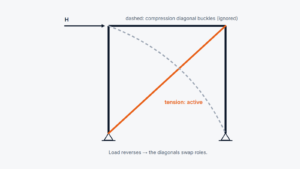
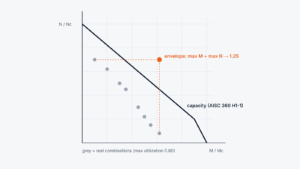
Related notes: The Concept of Envelope Combinations and Their Limitations · Tension-Only Bracing Systems
Originally published in 2020; revised in 2026.